Marco Borggreve
Article
 Chloe Weiss
Star soprano and conductor Barbara Hannigan reflects on winning the 2025 Polar Music Prize, her musical heroes and the power of collaboration.
You have such a long list of achievements and accolades that showcase your extraordinary talent and dedication, the most recent being the 2025 Polar Music Prize, often referred to as the "Nobel Prize of Music". How did it feel to win that prize and join the list of such highly-regarded artists as Queen, Sir Paul McCartney, Björk, Herbie Hancock, Joni Mitchell—the list goes on!
I’d just finished a recital in Toronto with Bertrand Chamayou and we were about to head off to the next city the next day when this email came in. I was alone in my hotel and thought, “I think I need to go to sleep”, so I just went to sleep! Then the next morning I woke up and started to process it, and I was very moved that they chose me. Maybe everybody has this, but you kind of think, “Why me?”. I just feel really honoured and humbled. The first time I heard about the prize was when Ligeti won it, and he's one of my heroes. A lot of people on that list are my heroes. I'm the second Canadian to receive the prize – the first Canadian was Joni Mitchell – so it's pretty neat.
This prize is particularly special, because it really spotlights you as a unique musical personality and your innovative approach. Do you feel like you're consciously pushing boundaries, or is it more of an organic evolution of your musical identity?
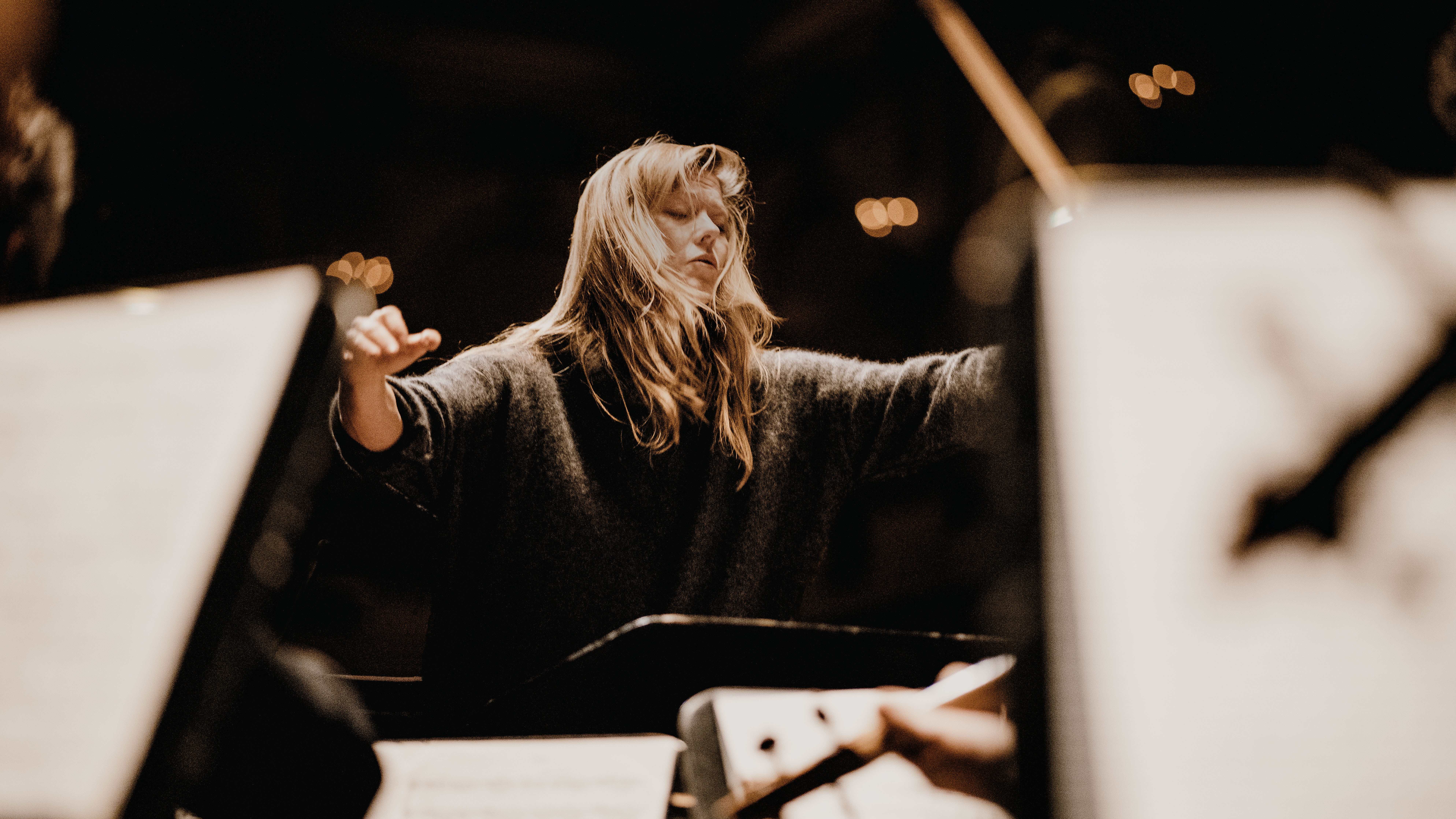
I don't set out to be pushing boundaries. I mean, I push boundaries with myself, but that's been my whole life since I was a kid. I guess that’s the nature of certain kinds of people: if we can run two kilometers then we try to run two and a half, and so on. Maybe other people think, “I met my goal, two kilometers is enough, great, done.” I've never been like that. Every day I go for a run and every day I try to do a little bit more or try to go a little bit faster. As far as innovation is concerned, I think if someone tries to be innovative, it's never going to work because it will be forced. What I've always done is to simply try to be in a relationship with music and with my emotions and my thoughts, and to let that dialogue – me and the music, me and the composers, me and my colleagues – be in a kind of free state. Then I might get an idea. I often get inspiration from my colleagues. When I was a kid, I would go to a concert and be so inspired that I’d just want to go home and practise and remember that feeling. I still get that. The other day I went to a concert of Les Siècles in Paris and Bertrand Chamayou was playing. He's a dear colleague of mine and it was music I'd never heard. My whole system was excited by that and I wanted to go home and practise. I wanted to get better and to try new things. The projects I‘ve come up with over the years – the ones that are really outside the box like La Voix Humaine or those where I’m singing and conducting – came about in a very organic way that I thought was very authentic to me.
I think that's what puts you in this class of musical icons. Who are your personal musical heroes?
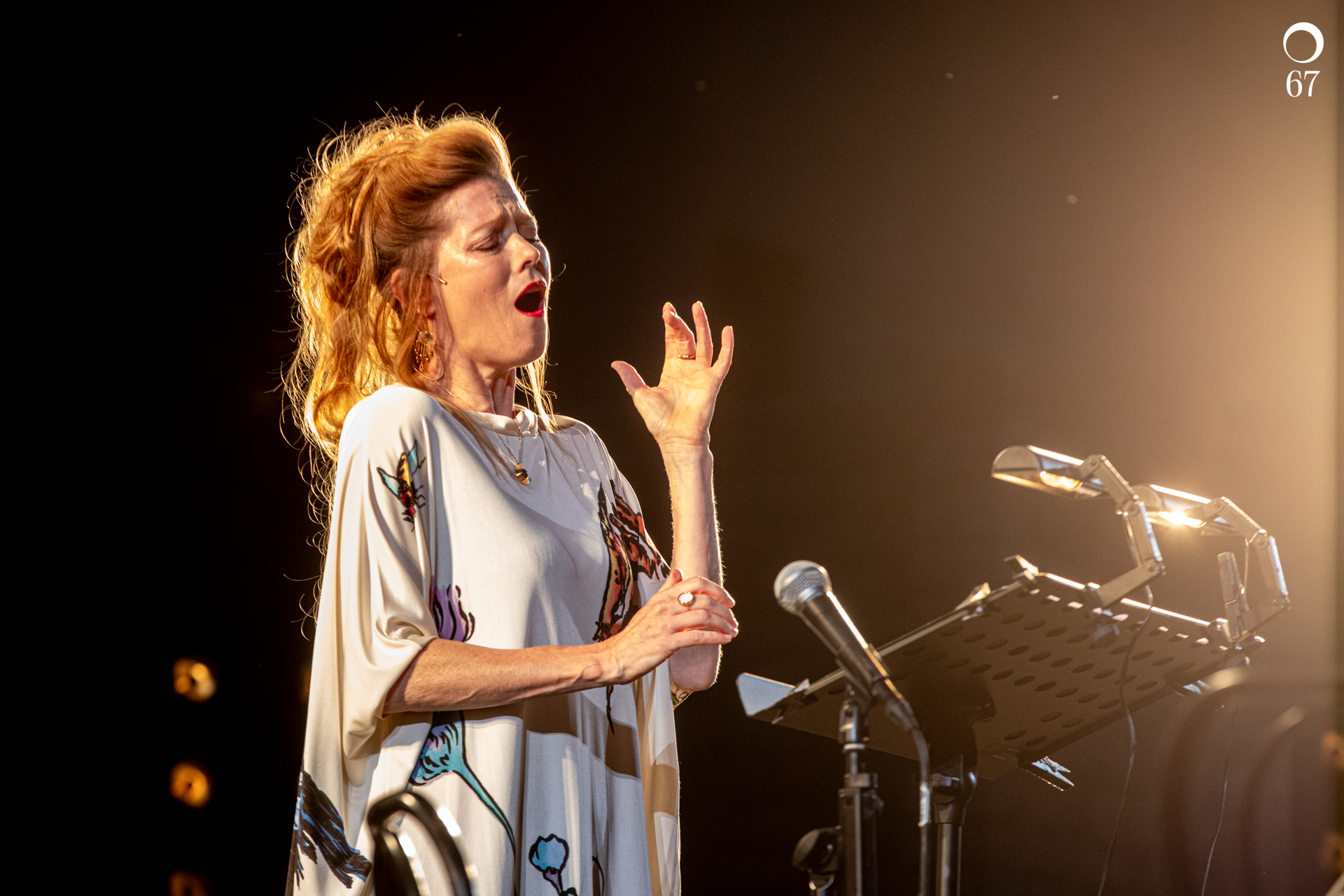
I have a lot. Probably most recently, I would say Barbra Streisand, because she's a legend. It's not just her singing but her entire artistic commitment and contribution as a director, editor, producer, writer, activist, actor, and singer. When Streisand began, the singing was a way to pay the bills, similarly to Joni Mitchell. She was studying acting and won some money in a talent contest, which led to her singing at a club called the Bon Soir at eighteen or nineteen years old, to pay for her acting lessons. You can hear the recording from that time and the freedom in her voice—this incredible, very high soprano voice. The way that she came at the music and every song, always from the text, always from the story and from the actor's perspective: that's something I identify very much with. I sing much better when I feel that I'm acting the text. The root is very important for me.
How about in the classical world?
There are many composers of course, like George Benjamin, Hans Abrahamsen and György Ligeti. John Zorn is a huge musical hero of mine, and a friend. I’ve worked a lot with John, especially in the last six years. He's my drug of choice right now. If I'm feeling a bit down, or a little bit discouraged, that guy is just such a huge inspiration. He picks and chooses the creatures that he works with, and all of us are in a state of utter commitment; every single person is pulling their weight, and that's very inspiring. If I do a John Zorn gig and then I go and work with an orchestra the next week, I'm still in John Zorn zone, and my expectations are very high of myself and of others.
You spoke about the explosion that sometimes happens when you hear someone or go to a concert, that ignites a creativity and excitement in you. Do you get the same feeling from collaborations with other artists?
Yes. I did the first recital tour that I've done in seven years with Bertrand Chamayou at the end of last year. We'd done a few recitals together previously, but this was a whole tour – ten recitals in a row – and that was extraordinary because in the preparation for it, and then in the execution of it, both of us were going to the next level. Every performance was better than the last. You're inspiring each other in this partnership, and all we wanted to do after that tour was to find every single opportunity to perform together again. You really find things, from the influence of another artist with whom you have a particular chemistry, that bring you to a place you could not have gone by yourself. That also happened to me working with certain composers, because they would make demands of me, or would see possibilities in me that I didn’t know I had, whether it was Abrahamsen, Ligeti or Henri Dutilleux. Alban Berg, who I never even met, also brought something out in me, through singing the role of Lulu. I never would have found the freedom that that character gave me, which then lent itself to so many other engagements that I did. I sang Lulu and then Marie in Zimmermann’s Die Soldaten two years later, and those two roles were such incredible marathons that I was then almost liberated to do other pieces, because I had achieved those.
You’ve performed a remarkable number of premieres—more than a hundred. Is there something special about that collaborative process with composers, and presenting works to an audience for the first time?
I don't think about it in terms of being poignant for the audience. I did my first premiere when I was seventeen, so it was actually very natural to me; it was part of my musical upbringing. Doing premieres gave me a certain sense of freedom because it didn't feel like the bar had already been set. When I was singing the well-known roles at the beginning, like Queen of the Night for example, there were always so many recordings available and I would think, “I need to be as good as that person”. With contemporary music I didn't feel that; it gave me a kind of liberty to explore. It also helped me understand the mentality of a composer: they want you to find your path within what they wrote on the page. They don't want you to find your path within all the recordings of their pieces that have been done. There is no composer that has ever said to me, “Can you please do it like the last soprano did it?”, and that's very important because within the singing tradition you're often taught, “This is the way you do this song.” But now I've worked with enough composers to know that that’s not what they want. They want you to do your version of what they wrote, not your version of what someone else did.
Your new album, Electric Fields – a project with the Labèque sisters and David Chalmin – is inspired by the life and music of Hildegard von Bingen, Barbara Strozzi and Francesca Caccini. What made you gravitate towards these centuries-old works from the medieval and baroque eras for this album?
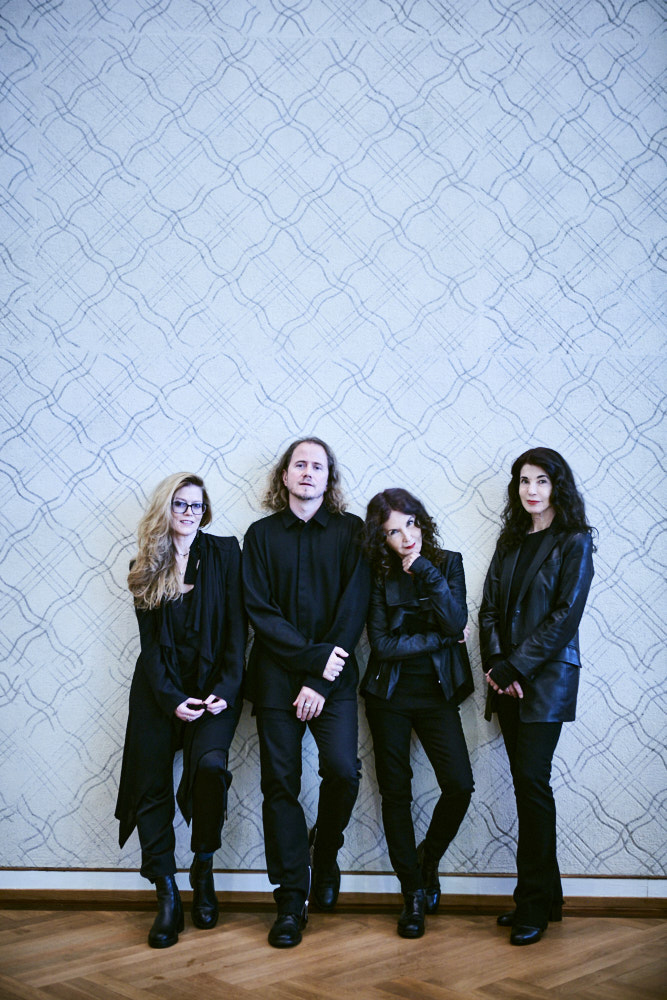
Hildegard is somebody whose music I’ve been performing since I was nineteen. I sometimes even put her next to Stockhausen, which worked very well actually, because they both were communicating with the universe. At university, my main study was music, but I also studied religion and theology, so I was taking courses on comparative religious ethics, women in major Western religious traditions, the Gospels, etc., and I'm still fascinated by that. I find it so relevant to the work I do as a conductor, in the dramaturgical work that I'm doing. There's something very spiritual and sacred about a lot of our classical repertoire. The Electric Fields album actually started because David Chalmin, who did all the electronics on the album, invited me over to his studio in 2015 to do an improvised session with him and this bass player, Massimo Pupillo from the band Zu. Massimo and I were in the studio improvising for hours, with David doing all these electronics, and it just sounded very cool. David is the partner of Katia Labèque, and I already knew the Labèque sisters, so they got involved and that’s how this whole project came about. We started brainstorming and thinking about the music, and very quickly got onto Hildegard. I just thought that music would be interesting with electronics—I'm probably not the first person in the world that has thought that. We were looking at other composers and we ended up with Barbara Strozzi and Francesca Caccini, but it wasn't like we were seeking female composers—I'm not even sure how it happened, we just ended up with them. I think Che si può fare? was a song I knew and I thought that would be interesting, so there was nothing forced about it. We also wanted some new material, so David was contributing on a compositional level and we brought Bryce Dessner in, who knew the Labèques very well. The project developed over many years and it changed a lot. When the album was finished, we didn't really know how to define it, but we knew that we really liked it.
It sounds like it developed very organically, and I love the idea of that creative process unfolding over years with friends. Where do you see that sense of creativity taking you next—do you have any other roles you want to explore in the future, or do you just take it step by step and enjoy each project as it comes?
Classical music involves a lot of advanced planning. You have to have a bit of a plan in mind and come up with some ideas for the future, but it's very hard for me to get excited about something that's happening in the future. That's not how my system works. At the end of this week I'm starting a project in Geneva with Romeo Castellucci. I agreed to this two and a half years ago, but it wasn't until last night that I was so excited I could hardly sleep, because we had a conversation yesterday and he was describing his concept of the project, and I just thought, “Oh my god, this man is a genius. This is going to be extraordinary”. I'm so thankful to be part of it, but if you'd asked me two weeks ago you wouldn't have seen that excitement, because I was completely immersed in another project.
Collaboration is a big part of your philosophy and something that you try to highlight when working with young artists. Can you talk a bit about your educational projects?
This year has been a big masterclass year on the North American tour with Bertrand Chamayou, and I'm regularly at the Royal Academy of Music and The Juilliard School. I also have my mentoring initiatives, Equilibrium and Momentum, although Momentum was more of a pandemic initiative which I think has achieved its purpose. This year I wanted to mainly focus on the masterclasses in the institutions because I really wanted to put my finger on the pulse of what the younger, pre-professional group want and need. That will help me figure out how to go forward with Equilibrium, because the world has changed since the pandemic and the arts have changed; people are more risk averse, organisations are more risk averse, and even young artists are more risk averse. During the pandemic, a lot more young artists wanted to become associated with an opera company; they wanted security. I started Momentum because I wanted older artists to share not only the stage but their salaries with younger artists. Amongst us older artists, almost everybody really wants to give back. If you ask, they'll usually do something, and that's what happened with Momentum. I must have asked maybe seventy-five people, and seventy-three said yes.
Do you think that element of instability is the main challenge facing young artists now?
I think there's a lot facing them. We had the pandemic, we had the Black Lives Matter movement that became very strong, and before that a call for diversity and the rise of the cancel culture. I think all of this is creating a very interesting rhetoric to try and navigate. Plus of course we have the online world and social media. Everybody is on their phones all the time—it's unbelievable. I can't tell you what it feels like to get into a rehearsal room where people are just playing music and we're concentrating for an hour and twenty minutes, and then we take a break, and then we concentrate again, and I don't see people on their phones. You get this authenticity to the self, and to the work and the concentration and discipline that it requires.
If you could give one piece of advice to your younger self, what would it be?
To the younger self, I don't know, because I probably wouldn't change anything, even the things that didn't go well. But I would say, really try to find a way to connect to your breath, the low grounded breath and centre of gravity from whence everything comes: the sound, the inspiration. When the breath is grounded and centred, the rest will come. Whether it's through exercise, meditation, breathing exercises or a combination of all those things, I really think that's the centre of it all. Whether it’s while playing the violin, walking on stage, practising, reading a book; this awareness of the breath and breathing brings us back to the present. So I guess what I'm trying to say is try to find ways to be in the present.
Electric Fields is out on IDAGIO now.