Article
 Chloe Weiss
Pianist, creator and television host Louis Philippson talks to IDAGIO about his journey from music conservatory to social media sensation, inspiring a younger audience to connect with classical music along the way.
Did you follow a traditional route into classical music?
I started off classically because that's basically all I had known my whole life. At around five or six I got accepted in an ordinary music school and I just fell in love with classical music. That's when I started learning Bach and Mozart. My teacher back then was adamant that I should continue with classical music and be exposed to a more professional level, because she thought I had talent. My parents are not musical at all, but they said “Let's go ahead and try it out.” They filmed me when I participated in my first competition and posted it on YouTube, and that's where my future professor at the Robert Schumann Hochschule in Düsseldorf found me. So that was my way into professional classical music.
Alongside your classical studies were you also exploring other genres?
I used to be so focused only on classical music, because that was the field I knew and grew up with, and it was also what people told me was the only acceptable way to learn music, especially piano music. Through TikTok and all the other social media platforms I found my love for playing other genres – pop songs, neoclassical music, and just generally a love for piano music in all its forms – but that's a very recent development in my musical career.
Did you have a sense of what you might want to do after your studies and did it work out as you imagined it?
When learning any art form I think you have some goals along the way, but there was never really an overriding one for me, I was always just seeking the next thing and to continue doing what I was doing. As a teenager I was used to a kind of double life: on the one hand I had this “normal” life of school and listening to pop music with my friends; and then I also had the Musikhochschule, which was a totally different world. I had those two paths and I always wondered which way I would eventually go. One path was to be a doctor or a lawyer and the other was to be a classical pianist, which I always wanted to be, but everyone knows it's very hard to be a classical pianist and to really break through the mould and be special enough to be chosen. Now I'm a pianist so that’s how it turned out!
How did your TikTok journey evolve from the first post to nearly 800K followers?
What’s funny is that I was never big on social media. I was never focused on it because I never had time—I was always just studying for school or playing the piano. I only had about a hundred Instagram followers and I was really proud of that. And then when I was about seventeen I was bored on a family trip and decided to start posting random vlogs on TikTok, just for my friends. I didn't know how to make my account private so I just posted them publicly without knowing, and those videos blew up. People were finding me funny, which was something I wasn’t really used to publicly. I started more as a personality, without the piano, like your average blogger on any social media platform, but then I wanted to introduce the piano – without any ambitions – just because piano playing is the biggest part of my life. I never thought that anyone would actually care. At school people thought it was cool that I could do all these crazy things on the piano, but they never really thought it was anything big, and I assumed it would be the same reaction on social media. I remember the first piece I played was La valse by Ravel, and it went viral. I was really excited so I just kept on posting and showing people my passion—learning things on the piano and vlogging my life as a pianist. I never expected it, but it actually turned out to be a topic that people were really interested in.
Sharing your playing on social media is helping to inspire younger generations to listen to classical music. Why do you think your music speaks to so many people?
I never saw myself as a missionary of classical music, it was basically just me sharing my life, and classical music happens to be a gigantic part of that. But I'm really glad it speaks to so many people. The coolest thing that I can experience – that I have experienced and hopefully will experience in the future – is people telling me that they started playing the piano or that they picked up their instrument again because of me, because I inspired them. Or even when they say (and this is one of the most random comments I get), “I don't even like the piano, but when you play it I can’t stop watching your videos.” Introducing classical music or piano playing to everyone from the core classical community to people who don't even think they like the instrument is the coolest part of what I do.
Your music reaches millions of people and probably a far wider and more diverse audience than if you were a standard classical concert pianist. Do you think social media helps to make classical music feel more inclusive?
Definitely. I believe there are many ways, but that's just the one I tried and it worked out so far. I think social media is a great way to get rid of this pedestal on which classic music often stands. People who don't have anything to do with it are afraid of it. We step on stage wearing a suit and we don't talk, we just bow dramatically and focus entirely on the music. Everything is so tense—you're not allowed to cough, you're not allowed to clap at certain parts, you’re just meant to be quiet, listen and appreciate it. So I get why people are confused about that. I think we need to step more towards familiarity, showing that we're playing the piano because it's a passion and because we're humans who want to share music, not because pianists are gods who can do more than you. I think that's the biggest step that we have to take and I think social media is a great way to do that, but it’s also about the way we play concerts.
You tend to talk about yourself as “playing the piano” rather than defining yourself within a genre. Is that deliberate?
Yeah, I love that you noticed that I just like saying that I play the piano, not that I’m a classical pianist, because people often ask in interviews, “What genre would you say you play?” I don't really play a genre, I'm just a pianist. I play everything.
Speaking of genres, you’re well known for your arrangements, not only of classical pieces but also of pop songs and anime. Do you come up with these arrangements on the spot or do you go away and work out the parts?
Normally the process is very spontaneous actually. Most days I practise and attend lectures at university all day long, so when I come home I like to listen to new songs and try to make something up on the spot. If it's something that people could be interested in or something that I find beautiful, I share it. If not, I just play around with it without posting. I don't make the arrangements too complicated—I could arrange them into broader, more intricate pieces but, especially for TikTok, I think it's good to show this spontaneity. I think that’s the coolest part of TikTok: it shows real life and not just taking something, working on it for days and then preparing it to be perfect. I like the imperfect side of TikTok.
Do you approach classical arrangements in the same way, or is there more of a compositional element in those?
Oh, for classical pieces, honestly I’m a little scared to approach those in a very loose way because I can imagine how the critics would flip out! I still try to be spontaneous about it, but I also work with amazing arrangers who I trust to make a good arrangement as a foundation, so that it’s not just my improvisation. They’re a bit more complicated, maybe because those classical pieces are so dear to my heart, so it’s more important to me to keep them a certain way.
How much time do you have to sit down and learn the core classical repertoire?
Oh, I need a lot of time because I’m still studying. I practise about eight hours a day.
You played in front of thousands of people at the Night of the Proms last year. How was that experience, playing in front of that many people?
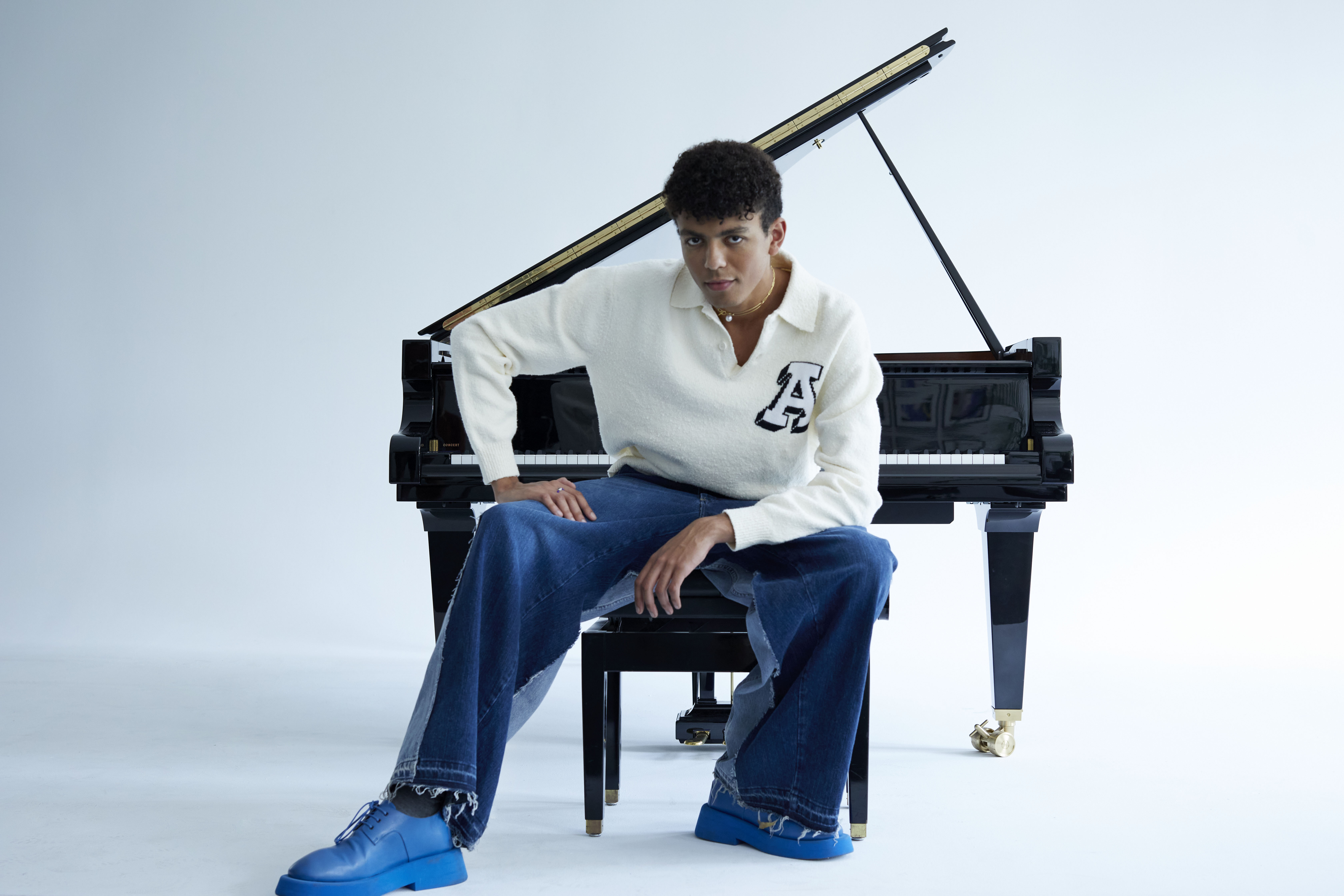
Before that, the biggest concert I ever played was in the smaller room of the Berliner Philharmonie, which was also amazing, but for classical music, the maximum is basically one or two thousand people. We had something like 23,000 people in this arena, which was insane. It was like being a pop star or something. It was also my first concert outside of university since I started TikTok, so it was a culture flash in every sense, but it was so much fun. I think the organisation for this kind of event is much harder and probably more stressful for everyone, but for me personally it felt much warmer than a classical concert because the people yell when they're amazed and smile and laugh—there was a very relaxed feeling. In classical concerts everyone is always so quiet, which I don't mind at all, but in a way it makes it much harder. The Night of the Proms was a totally different experience.
Do you get nervous, and if so, how have you learnt to deal with that?
I mean, everyone has nerves, right? If there are people out there who don't get nervous, I'm so jealous. On the other hand, they’re not the same nerves I'd have as a child—that was straight up fear. I remember I would just be shaking on the stage, unable to play. But now I get nervous in mostly positive ways, so I'm grateful for that. At the Night of the Proms I somehow wasn’t nervous. When I came on stage everything was dark anyway, so I couldn't see the audience and I just pretended I was in my living room playing with this gigantic orchestra who are all my friends, and that was a very warm feeling. But I have to say that, for classical concerts especially, there are nerves because you try not to make any mistakes and play everything according to what your teacher has said. I believe, or at least hope, that after studying in this very fierce field, the nerves will get less.
You’re such a captivating and energetic performer. Where does that energy and natural musical talent come from?
It’s funny because just a week ago I was watching old videos of myself vlogging when I was about five years old, already taking to the camera and being a very energetic person. So I guess that part of myself has always been inside me. My family is not musical and when I go on stage my parents have more nerves than I do. I don't know where it comes from, but I think I just always loved being on stage and enjoying the moment.
You’ve worked with some big stars - do any of those collaborations particularly stand out?
I think the most memorable was probably with the Serbian singer Teya Dora—that was a really cool collaboration. It was my first time really being in touch with pop music. I remember not knowing who she was or what the song was – it's called Džanum – and then I found it on TikTok and saw how viral it was and that everyone loved it. I told my friends that I'm supposed to play with this woman called Teya Dora and they were flipping out and couldn’t believe I’d never heard of Džanum before. I think it was my first music video shoot, which was also a lot of fun, and I still love the song to this day.
You're still so young, but do you have an idea of what's next? Do you have any specific aspirations for the future?
Yes, I'm very excited for this year because my debut album comes out in February and in April I have my first tour with about five hundred people for each date. Later this year I have a much bigger tour with audiences of around one to three thousand people, and that's very exciting for me because I get to make my own concert and design it the way I want. I don't have to adhere to the purely classical rules of just sitting down and performing your programme. I'm excited to talk to the audience, get some people up on stage and make it a classical concert in more of a pop artist way. The Night of the Proms was my first concert where I talked to an audience before I played and while I played, and for me that was really exciting. That’s something I want to develop—being able to connect to the audience, not only through my music, but also through myself and my voice. That's my dream and I hope it works out.
Exposition is out on IDAGIO now.