
©Markus Jans
Article
 IDAGIO
 At sixteen, Justus Eichhorn represents a new generation of classical musicians: one shaped by both tradition and the possibilities of the digital age. He has been performing internationally since childhood while also building a global audience online, connecting with listeners far beyond the concert hall. His artistic identity, however, remains closely tied to a specific place: Weimar, the city where he was born and raised, and the starting point of his debut album, The Source.
Released by Deutsche Grammophon, The Source traces a personal musical lineage, bringing together works by Bach, Liszt, Mendelssohn, Hindemith, Richard Strauss, and Schubert alongside Eichhorn's own compositions, arrangements, and reimaginings of Czerny. Rather than presenting tradition as something to preserve behind glass, the album treats it as a living conversation – one in which improvisation, composition, and interpretation exist side by side.
In this conversation, Eichhorn reflects on growing up in public, finding his own voice as both pianist and composer, and why, for him, The Source begins by returning to the musical roots that shaped him.
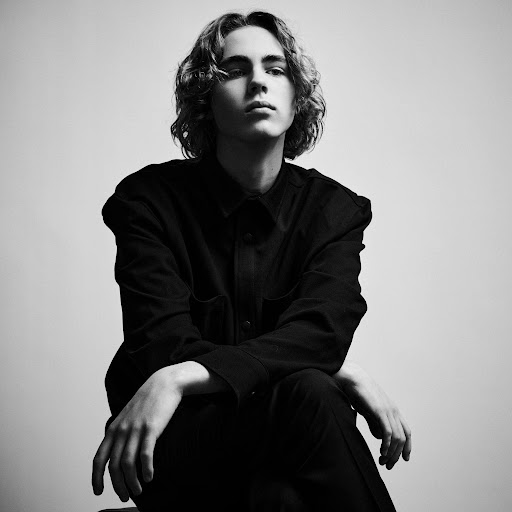
You've been performing internationally since you were ten, and much of your life has unfolded in front of audiences. Has growing up on stage changed the way you understand yourself away from it?
Performing has been a natural part of my life from the very beginning. I have never experienced being on stage as something separate from my everyday life. It has not changed the way I see myself away from music. Outside of school and the piano, I play football as part of a team, I’m passionate about winter sports – especially skiing – and, like many people, I enjoy spending time with friends, whether that’s going swimming or just hanging out. I also love being in nature and enjoy hiking whenever I can.
Your debut album is called The Source, and it begins in Weimar, the city where you grew up. What made you realise that your first album had to start there?
Weimar is, in many ways, my place of origin. It is where I was born and grew up. The city is known not only for Goethe and Schiller, but also for great musicians such as Bach, Liszt, and many other composers who lived and worked there. For me, that connection has never been something abstract – it has always been very tangible. Ever since I was a child, I have cycled past Liszt’s house almost every day, and Bach’s former home stood right on the market square. In that sense, these great composers have always felt present in my everyday life. That is why it felt completely natural for me to begin my musical journey on record in Weimar.
For your debut, you could have recorded almost anything. What made you decide to begin with music that looks back at the composers and traditions connected to your hometown?
Both Bach and Liszt have accompanied me ever since I started playing the piano. They remain two of my absolute favourite composers. For that reason, choosing music by composers closely connected with Weimar for my debut album was an easy decision. It creates not only a meaningful link to my hometown, but also reflects something deeply personal. I chose works that are especially close to my heart and that I have loved for many years. Alongside Bach and Liszt, there are works by Schubert, Mendelssohn, Richard Strauss, and Hindemith on the album.
Another composer who has played a central role in my musical development is Carl Czerny. His études are part of my daily practice routine and have been for many years. I know that many pianists think of them mainly as technical exercises, but I genuinely enjoy playing them. I have always tried to approach them not simply as studies, but as brilliant virtuoso pieces full of character and musical expression, and I love to invent variations on the études. Since Czerny was Franz Liszt’s teacher, including his music on the album also creates a beautiful musical connection. For me, it was only natural that he should be part of The Source.
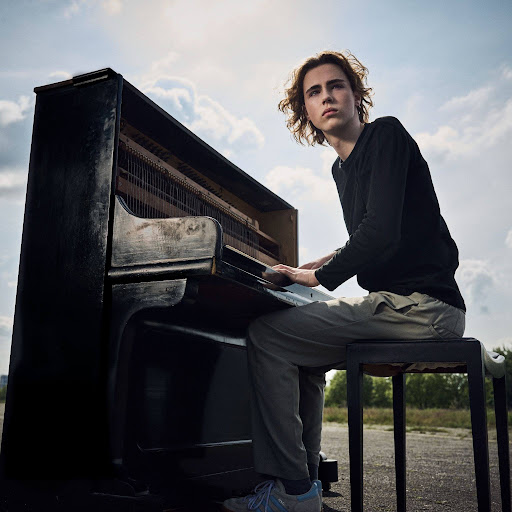
As a composer, how do you know when a piece sounds like you, rather than the music you've spent years playing?
When I write my own music, I don’t think about other pieces or composers. I feel completely free and never try to work within predetermined boundaries. I’m always curious to discover where the creative process will take me. If I w
ere a painter, I would describe it like this: I don’t begin by saying, “Today I’ll paint in black and white,” or “Today I’ll use a pencil,” or “Today I’ll paint with watercolours.” Instead, I let my imagination guide me, and I’m just as excited as anyone else to see what emerges in the end.
Your three original works on the album all grew out of improvisation. What is it that you're listening for in those moments?
Yes, all of my own pieces begin as improvisations. I listen inwardly and explore harmonic and melodic connections that create the particular feeling I want to express. At the moment, I’m especially drawn to writing melancholic music that sounds like memories or dreams. But I’ve also written pieces that are wild and full of fire.
A concert hall asks for complete silence and attention, while social media offers only a few seconds to capture someone's interest. Do those two worlds ever pull you in different artistic directions?
They are, of course, completely different worlds. The spark that connects with people on the internet is different fro
m the one that exists on stage. Above all, the sense of time is completely different. In a concert hall, silence, pauses, and the shared act of breathing become almost magical parts of the music. I think that kind of experience only truly works live or when someone listens to a recording with their full attention.
Online, the spark usually comes from movement, action, or something unexpected that immediately captures attention. Both worlds have their own appeal, but they speak to people in different ways.

Creating your debut album is a major milestone, but it's also the beginning of a much longer journey. What comes next?
My next recording project hasn’t been decided yet, but right now I’m especially looking forward to my upcoming concerts. At the moment, I’m working on Beethoven’s Fourth Piano Concerto. It has a very special meaning for me because it is the last of Beethoven’s five piano concertos that I have yet to perform. Completing the entire cycle this autumn with the Fourth Concerto will be a real milestone for me.
I deliberately saved this concerto until last, and I think it is one of Beethoven’s greatest achievements in terms of lyricism and beauty of sound. Looking ahead, I also want to immerse myself much more deeply in Chopin’s music. And in 2027, I will perform Tchaikovsky’s First Piano Concerto for the first time.
When someone hears The Source for the first time, what do you hope they understand – not about your biography, but about your musical voice?
Every work on this album has become a part of me. I have lived with these pieces and developed my interpretations over a long period of time. For me, the most important aspect of making music is transforming the feelings and imagination I experience while studying a work into something that becomes audible through the piano.
I want to tell stories through sound and invite listeners to explore their own inner world. One of the most fascinating things about music is that exactly the same passage can evoke completely different emotions in different people. In Schubert, for example, one listener may hear overwhelming joy, while another hears profound sadness in the very same music. I feel the same about Bach, especially in his slow movements, which open up an extraordinary range of emotional worlds.
To me, that is the great mystery – and the greatest wonder – of music.
Mark the date: Justus Eichhorn’s debut album will be available on IDAGIO from 11 September 2026. In the meantime, discover more of his recordings on IDAGIO.