Article
 IDAGIO
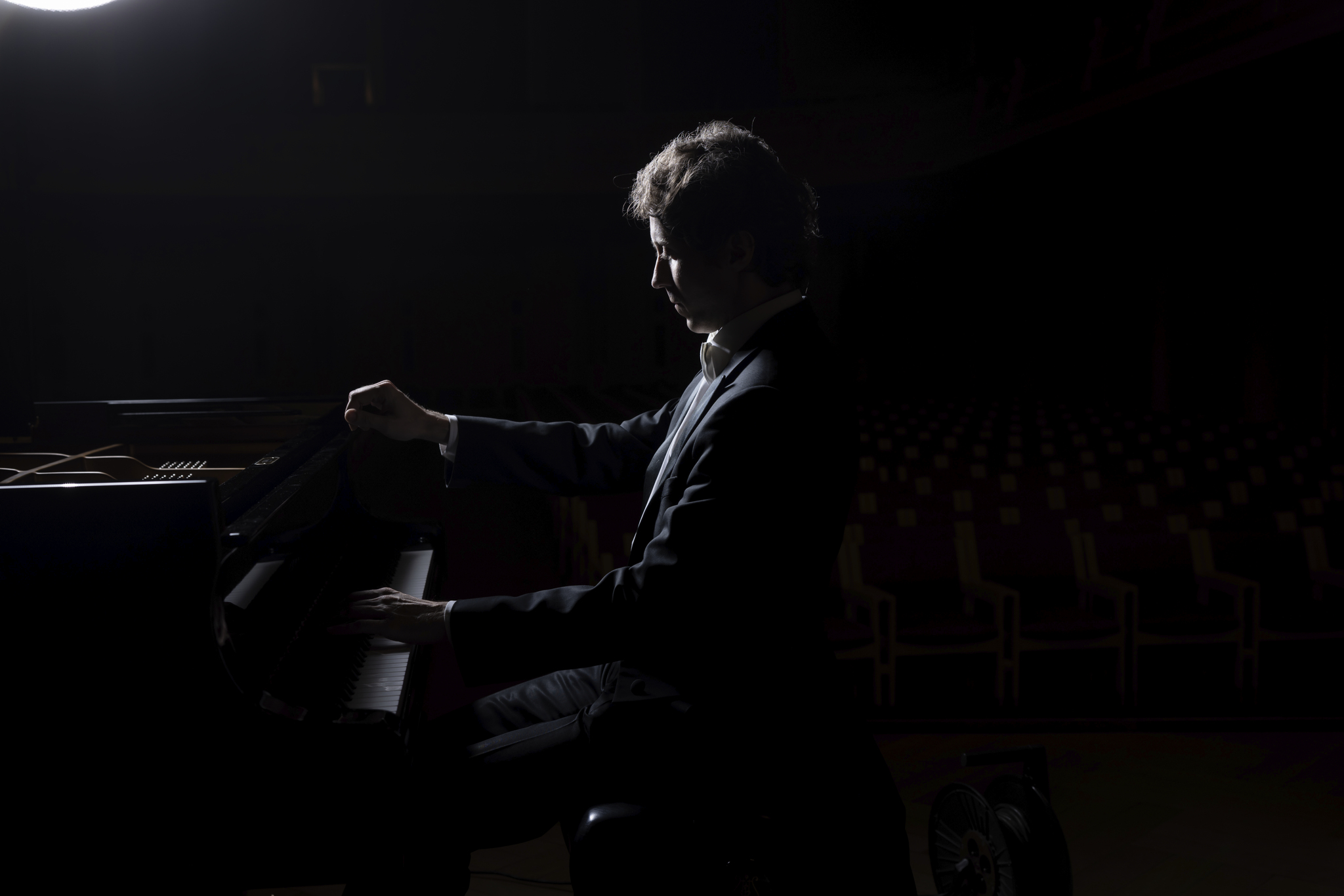
 Praised by Martha Argerich as “a very honest, extraordinary and sensitive artist,” Polish pianist Rafał Blechacz is one of the leading musicians of his generation. The winner of the XV International Chopin Piano Competition (2005) and recipient of the Gilmore Artist Award (2014) joins us for 4½ Questions to discuss his upcoming album, PIANO CONCERTOS – Mozart No. 24 & Beethoven No. 3, with the Dresdner Philharmonie and Kent Nagano.
1. What was the biggest challenge in this recording project?
I think the greatest challenge of this project was coordinating everyone’s schedules. Solo recordings are much easier to arrange – you simply need the artist’s availability and a recording studio that fits the calendar. Recording with an orchestra, however, is a different matter altogether. It is essential that the entire orchestra, the conductor, the soloist, the recording team and the piano technician all share the same time slot, one in which everyone is able to perform at their very best. I’m delighted that we managed to align everyone’s schedules and complete these recordings in October of last year.
2. What did you discover while preparing this repertoire?
C minor has always been one of my favourite keys in music. Spending so much time with the works we recorded has only reinforced my feeling that, alongside their inner drama and power, these masterpieces possess an extraordinary rhetorical quality. Many of the themes and musical phrases from these concertos strike me as almost symbolic, embodying Mozartian tragedy or Beethovenian defiance.
3. Is there a moment on the album that feels especially personal to you?
On a more personal note, I should mention Mozart’s Piano Concerto in C minor, K. 491, a work that has fascinated me since childhood and has continued to grow with me over the years. I first performed it -together with Hummel’s cadenza in the first movement- in my hometown at the age of thirteen. Above all, however, the central thread running through this album is the key of C minor itself, with all its harmonic and emotional richness. I have always been drawn to masterpieces written in this key – a world of depth, darkness, drama and strength. I still remember that, when Maestro Kent Nagano invited me to perform with him in Montreal in 2014, I chose Beethoven’s Third Piano Concerto in C minor. I have also frequently included Beethoven’s C minor Variations in my recital programmes, often pairing them with Bach’s Partita No. 2 and concluding the evening with Szymanowski’s Sonata in C minor.
4. What role does silence play in this music for you?
There are many moments in these piano concertos where silence stops my breath and heightens the tension and anticipation of what is about to follow. It is precisely this context that feels, to me, extraordinarily important here. Silence alone can be nothing more than “time without sound.” But when it follows, for instance, dramatic octaves in fortissimo, the first note or chord in piano or pianissimo after such a pause reveals itself as something truly special and sometimes wholly unexpected for the listener in terms of colour, dynamic and timing, as these pauses are very often marked with a fermata too.
4½. What’s one piece of advice you’d give young pianists today?
Krystian Zimerman once gave me a piece of advice: “I have only one piece of advice for you – don’t listen to advice.”
Mark the date: Rafał Blechacz’s new album with the Dresdner Philharmonie and Kent Nagano will be available on IDAGIO from 14 August 2026. In the meantime, discover more of his recordings on IDAGIO.